Driving global energy connections through reliable and efficient LNG solutions
Liquefied Natural Gas (LNG) is natural gas that has been cooled to around -161°C to turn it into a liquid. This process reduces its volume by over 600 times, making it easier and safer to store and transport over long distances. The composition of LNG primarily consists of methane (CH₄), which makes up 95–99% of the total volume. Along with methane, LNG may contain small amounts of other hydrocarbons and gases, depending on the source of the natural gas and the level of processing it undergoes before liquefaction.
As a versatile and reliable energy source, LNG powers industries, homes, and transportation, while supporting efforts toward cleaner and more sustainable energy solutions.
As the world moves toward sustainable energy, natural gas continues to play a significant role in providing reliable and cleaner energy solutions.
GAIL’s Role in LNG
As a leader in India’s natural gas sector, GAIL (India) Limited is at the forefront of expanding LNG infrastructure-from import terminals to transportation and city gas networks. Through LNG, GAIL is committed to fueling economic growth while supporting India’s clean energy goals.
LNG Sourcing
GAIL (India) Limited has an LNG sourcing portfolio of approximately 16.57 MMTPA, the largest in India and among the top LNG marketing portfolios globally. The portfolio is built on a diversified mix of suppliers, contracts, price indexations, and delivery structures such as RLNG, DES, and FOB, ensuring affordability and supply reliability. Through flexible sourcing strategies, optimized shipping arrangements, and long-term contracts, GAIL effectively manages price volatility and strengthens the LNG supply chain. As India’s LNG demand is expected to grow significantly by 2030, GAIL will continue to play a pivotal role in driving LNG imports and enhancing the country’s energy security.
International Operations
GAIL (India) Limited has signed Master Sales and Purchase Agreements (MSPAs) with several major reputed International LNG Suppliers, Producers and Traders. GAIL has been off-taking RLNG from Petronet LNG Limited (PLL) under its long-term SPA being supplied from Qatar and Australia. GAIL has also been successful in securing LNG under long term agreements from suppliers like Sabine Pass, Cove Point USA etc. For its LNG portfolio, GAIL has chartered several LNG vessels on spot and time charter basis. With growing gas demand in India, GAIL brings most of the US volumes to India through an optimal mix of own ship charters and structured optimization transactions like Destination Swap, etc.
In addition to the above GAIL’s wholly owned subsidiary, GAIL Global Singapore Pte Ltd (GGSPL), is operating in LNG trading business segment.
• List of Parties Having MSPA with GAIL
• Qualifying Criteria for Signing of MSPA with Parties for Supply/Sourcing of LNG
• LNG Bidding Portal Access Framework
LNG Shipping
GAIL (India) Limited optimizes LNG transportation through a balanced combination of long-term vessel charters, spot shipping arrangements, and flexible logistics strategies. The company leverages delivery flexibility under FOB and DES contracts, along with cargo swaps and destination optimization, to reduce freight costs and capture market opportunities. By dynamically aligning shipping schedules with regasification terminal availability, GAIL minimizes demurrage and ensures efficient cargo handling. This integrated shipping strategy enhances supply reliability and helps deliver competitively priced natural gas to consumers across India.
GAIL has also expanded its LNG shipping capacity by bringing 7 LNG vessels namely: GAIL Bhuwan, GAIL Sagar, GAIL Urja, Grace Emilia, Maran Gas Pericles & Maran Gas Ulysses, and through number of spots.
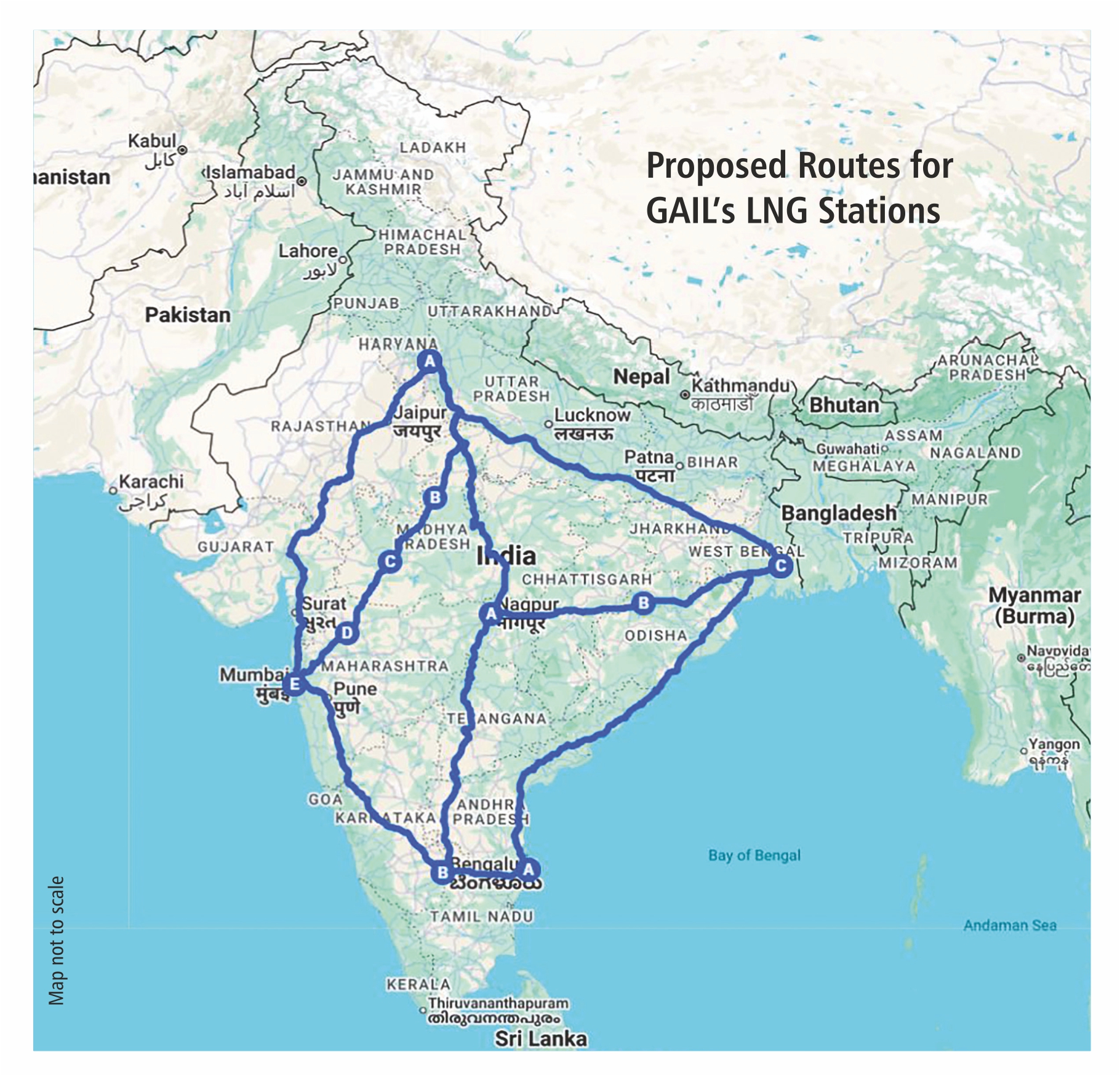
Downstream LNG:
As a versatile and reliable energy source, LNG powers industries, homes and transportation while supporting efforts toward cleaner and more sustainable energy solutions.
Liquefied Natural Gas (LNG) is an efficient and eco-friendly fuel for trucks, offering 10–15% higher mileage than diesel,10–15% lower fuel costs, savings on Diesel Exhaust Fluid (DEF) due to spark-ignition engines that require no exhaust treatment, eliminating pilferage or theft as LNG is stored at –160°C, while also significantly **reducing emissions**.
LNG Application: Mono vs Dual Fuel Conversion
• Mono fuel application: Used in Heavy Duty Vehicles (HDV) including dumpers up to 55 tons (100% LNG).
• Dual fuel application: Used in dumper sizes above 55 tons.
• No engine modification is required in dual fuel application.
• In mono fuel application:
1. Company-fitted vehicles: Purchasing directly from OEMs (Ashok Leyland, Blue Energy Motors, Tata Motors, Eicher, Volvo, etc.)
2. Retro-fitted vehicles: Converting existing fleet to LNG through retro-fitment:
▪ Replace old diesel engine with New/Recon Gas Engine for LNG usage
▪ Modify old diesel engine for LNG usage
विश्वसनीय और प्रभावी एलएनजी समाधानों के माध्यम से दुनिया को ऊर्जा से जोड़ना।
द्रवीकृत प्राकृतिक गैस (एलएनजी) प्राकृतिक गैस का तरल रूप है, जिसे लगभग -161°से. तक ठंडा करके बनाया जाता है। इससे गैस का आकार 600 गुना से अधिक कम हो जाता है, जिससे इसे संग्रहित करना और लंबी दूरी तक ले जाना आसान और सुरक्षित हो जाता है। एलएनजी में मुख्य रूप से मीथेन (CH₄) होती है, जो इसकी कुल मात्रा का लगभग 95–99% हिस्सा होती है। इसके अलावा, इसमें थोड़ी मात्रा में अन्य गैसें और हाइड्रोकार्बन भी हो सकती हैं, जो प्राकृतिक गैस के स्रोत और उसकी प्रोसेसिंग प्रक्रिया पर निर्भर करती है।
एलएनजी एक बहुउपयोगी और विश्वसनीय ऊर्जा स्रोत है, जो उद्योगों, घरों और परिवहन क्षेत्र को ऊर्जा उपलब्ध कराती है। साथ ही, यह स्वच्छ और पर्यावरण-अनुकूल ऊर्जा के उपयोग को बढ़ावा देती है।
दुनिया के सतत और स्वच्छ ऊर्जा की ओर बढ़ने के साथ, प्राकृतिक गैस एक विश्वसनीय और अपेक्षाकृत स्वच्छ ऊर्जा स्रोत के रूप में महत्वपूर्ण भूमिका निभा रही है।
एलएनजी में गेल की भूमिका
भारत की अग्रणी प्राकृतिक गैस कंपनी गेल (इंडिया) लिमिटेड देश में एलएनजी अवसंरचना के विस्तार में महत्वपूर्ण भूमिका निभा रही है। आयात टर्मिनलों, गैस पाइपलाइन नेटवर्क और नगर गैस वितरण प्रणालियों के विकास के माध्यम से गेल एलएनजी क्षेत्र को मजबूत बना रही है। एलएनजी के जरिए गेल देश के आर्थिक विकास को बढ़ावा देने के साथ-साथ स्वच्छ ऊर्जा लक्ष्यों को हासिल करने के लिए भी कार्य कर रही है।
एलएनजी का स्रोत
गेल (इंडिया) लिमिटेड के पास लगभग 16.57 एमएमटीपीए का एलएनजी आपूर्ति पोर्टफोलियो है, जो भारत में सबसे बड़ा और दुनिया के प्रमुख एलएनजी पोर्टफोलियो में से एक है। यह पोर्टफोलियो विभिन्न आपूर्तिकर्ताओं, अनुबंधों और आपूर्ति व्यवस्थाओं के कारण गेल किफायती और विश्वसनीय एलएनजी आपूर्ति सुनिश्चित करता है। लचीली खरीद रणनीतियों, बेहतर शिपिंग व्यवस्था और दीर्घकालिक अनुबंधों के माध्यम से गेल कीमतों में उतार-चढ़ाव का प्रभावी प्रबंधन करती है और एलएनजी आपूर्ति श्रृंखला को मजबूत बनाती है। वर्ष 2030 तक भारत में एलएनजी की मांग में उल्लेखनीय वृद्धि होने की संभावना है। ऐसे में, गेल एलएनजी आयात को बढ़ावा देने तथा देश की ऊर्जा सुरक्षा को मजबूत करने में महत्वपूर्ण भूमिका निभाती रहेगी।
अंतरराष्ट्रीय परिचालन
गेल (इंडिया) लिमिटेड ने दुनिया की कई प्रमुख एलएनजी कंपनियों, उत्पादकों और व्यापारियों के साथ मास्टर सेल्स एंड परचेज एग्रीमेंट (एमएसपीए) किए हैं। इसके अलावा, गेल पेट्रोनेट एलएनजी लिमिटेड (पीएलएल) के साथ अपने दीर्घकालिक समझौते के तहत कतर और ऑस्ट्रेलिया से आने वाली पुनर्गैसीकृत द्रवीकृत प्राकृतिक गैस (आरएलएनजी) प्राप्त कर रही है।
इसके अलावा, गेल ने अमेरिका के सैबिन पास, कोव प्वाइंट जैसे प्रमुख आपूर्तिकर्ताओं के साथ दीर्घकालिक समझौते किए हैं, जिससे एलएनजी की नियमित आपूर्ति सुनिश्चित होती है। अपने एलएनजी कारोबार के लिए गेल ने स्पॉट और दीर्घकालिक चार्टर आधार पर कई एलएनजी जहाजों की व्यवस्था की है। भारत में प्राकृतिक गैस की बढ़ती मांग को पूरा करने के लिए गेल अपने चार्टर्ड जहाजों और डेस्टिनेशन स्वैप जैसी व्यवस्थाओं का उपयोग कर अमेरिका से प्राप्त अधिकांश एलएनजी को भारत तक कुशलतापूर्वक पहुँचाती है। उपर्युक्त के अतिरिक्त, गेल (इंडिया) लिमिटेड की पूर्ण स्वामित्व वाली सहायक कंपनी गेल ग्लोबल सिंगापुर प्राइवेट लिमिटेड (जीजीएसपीएल) एलएनजी व्यापार क्षेत्र में कार्यरत है।
• गेल के साथ एमएसपीए करने वाले पक्षों की सूची
• एलएनजी की आपूर्ति/ स्रोत प्राप्ति हेतु पक्षों के साथ एमएसपीए हस्ताक्षर करने के लिए पात्रता मानदंड
• एलएनजी बोली पोर्टल की अभिगम रूपरेखा
एलएनजी शिपिंग
गेल (इंडिया) लिमिटेड दीर्घकालिक चार्टर, स्पॉट शिपिंग और लचीली लॉजिस्टिक रणनीतियों के माध्यम से एलएनजी परिवहन को अधिक कुशल बनाती है। कंपनी एफओबी और डीईएस अनुबंधों के तहत उपलब्ध सुविधाओं, कार्गो स्वैप और गंतव्य अनुकूलन का उपयोग करके परिवहन लागत कम करती है और बाजार के अवसरों का लाभ उठाती है। गेल पुनर्गैसीकरण टर्मिनलों की उपलब्धता के अनुसार अपने शिपिंग कार्यक्रमों में समय-समय पर बदलाव करती है, जिससे अतिरिक्त लागत कम होती है और कार्गो का बेहतर प्रबंधन सुनिश्चित होता है। इस प्रभावी शिपिंग व्यवस्था से एलएनजी आपूर्ति अधिक विश्वसनीय बनती है और देश भर के उपभोक्ताओं को प्रतिस्पर्धी कीमतों पर प्राकृतिक गैस उपलब्ध कराने में मदद मिलती है।
गेल ने अपनी एलएनजी शिपिंग क्षमता का विस्तार किया है। कंपनी के पास वर्तमान में गेल भुवन, गेल सागर, गेल ऊर्जा, ग्रेस एमिलिया, मारन गैस पेरिक्लीज़ और मारन गैस यूलिसिस सहित 7 एलएनजी पोत हैं। इसके अलावा, जरूरत पड़ने पर कंपनी स्पॉट आधार पर भी एलएनजी जहाजों की सेवाएं लेती है, जिससे एलएनजी की आपूर्ति सुचारु रूप से बनी रहती है।
डाउनस्ट्रीम एलएनजी:
एलएनजी एक बहुउपयोगी और विश्वसनीय ऊर्जा स्रोत है, जो उद्योगों, घरों और परिवहन क्षेत्र को ऊर्जा उपलब्ध कराती है। साथ ही, यह स्वच्छ और टिकाऊ ऊर्जा के उपयोग को बढ़ावा देने में भी मदद करती है।
द्रवीकृत प्राकृतिक गैस (एलएनजी) ट्रकों के लिए एक किफायती और पर्यावरण-अनुकूल ईंधन है। यह डीजल की तुलना में 10–15% अधिक माइलेज देती है और ईंधन खर्च को 10–15% तक कम कर सकती है। एलएनजी से चलने वाले इंजनों में डीजल एग्जॉस्ट फ्लूइड (डीईएफ) की आवश्यकता नहीं होती, जिससे अतिरिक्त खर्च बचता है। एलएनजी को बहुत कम तापमान (-160°से.) पर रखा जाता है, इसलिए ईंधन चोरी की संभावना भी लगभग नहीं रहती। साथ ही, यह प्रदूषण और उत्सर्जन को कम करने में मदद करती है।
एलएनजी का उपयोग: मोनो फ्यूल बनाम दोहरा ईंधन रूपांतरण
• मोनो फ्यूल अनुप्रयोग : 55 टन तक की क्षमता वाले भारी वाणिज्यिक वाहनों (एचडीवी), जैसे डंपरों में उपयोग किया जाता है (100% एलएनजी)।
• दोहरा ईंधन अनुप्रयोग: 55 टन से अधिक क्षमता वाले डंपरों में उपयोग किया जाता है।
• इस प्रणाली में इंजन में किसी बड़े संशोधन की आवश्यकता नहीं होती।
• मोनो फ्यूल अनुप्रयोग में:
1. कंपनी फिटेड वाहन: एलएनजी-संचालित वाहन सीधे ओईएम (जैसे अशोक लीलैंड, ब्लू एनर्जी मोटर्स, टाटा मोटर्स, आयशर, वोल्वो आदि) से खरीदे जाते हैं।
2. रेट्रो-फिटेड वाहन: मौजूदा वाहन बेड़े को रेट्रोफिटमेंट के माध्यम से एलएनजी आधारित वाहनों में परिवर्तित किया जाता है:
▪ एलएनजी उपयोग के लिए पुराने डीजल इंजन को नए/ पुनर्निर्मित गैस इंजन से बदलना।
▪ एलएनजी उपयोग के लिए पुराने डीजल इंजन में आवश्यक संशोधन करना।